17 January 2026 is a historic milestone for protection of the ocean in areas beyond national jurisdiction. It is the day that the Agreement under the United Nations Convention on the Law of the Sea on the Conservation and Sustainable Use of Marine Biological Diversity of Areas beyond National Jurisdiction (the BBNJ Agreement) comes into force. It puts in place, for the first time, a legal and policy framework at a global level for the protection of ocean biodiversity in areas beyond national jurisdiction. The Agreement provides welcome political focus and momentum to GOBI’s work on advancing the scientific basis for conserving biological diversity in the marine environment, in particular in the deep seas and open ocean. To help maintain this momentum, it will be important for the upcoming Preparatory Commission meeting on 23 March to 2 April 2026 in New York to make good progress on the necessary subsidiary frameworks and mechanisms to ensure the best possible starting point for the first BBNJ Conference of the Parties (COP).
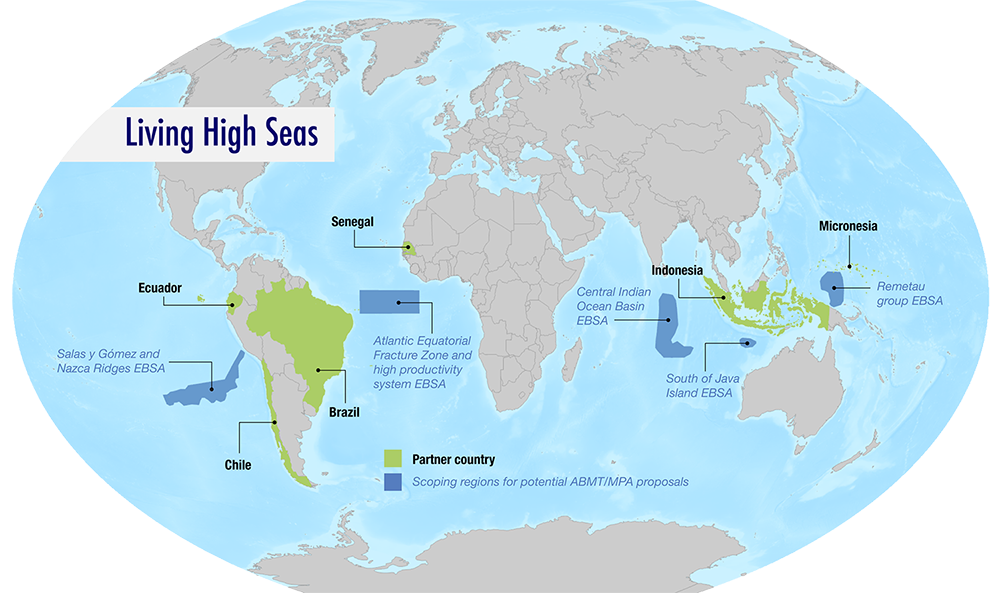
The timing fits well with GOBI’s role as a partner in the new Living High Seas project, which seeks to develop BBNJ-ready proposals for area-based management tools (ABMTs). Led by the German International Cooperation Agency (GIZ), Living High Seas has partnerships at its core and will work with a coalition of partner countries – Brazil, Chile, Ecuador, Indonesia, Micronesia and Senegal – to develop and submit regionally coordinated proposals for ABMTs, including marine protected areas. As of 17 January, all six countries have signed the Agreement, and most have ratified it (see the BBNJ treaty status). Through Living High Seas, GOBI will work with these countries to strengthen the scientific evidence for selected ecologically or biologically significant marine areas (EBSAs) established under the CBD in five regions of the ocean that are known for their high biodiversity and climate value. These EBSAs, located in the Atlantic, Pacific and Indian oceans, will provide as starting points in which to scope out specific potential candidate sites for ABMT proposals, including MPAs (see map below).
Living High Seas partner countries and target regions